
Fire Dynamics and Fire Modeling Research
Advancing fire science to keep pace with how modern materials, buildings, and vehicles have changed how fires start, grow, and spread.
Advancing fire safety starts with understanding how fire behaves. UL Research Institutes’ Fire Safety Research Institute expands fundamental fire science through laboratory experiments and computational modeling so that fire models better reflect reality.
This work is the foundation for our application-focused research, including wildfires, lithium-ion battery hazards, and firefighter health and safety. It also supports the experts who advance fire dynamics themselves. We contribute to open modeling tools, produce validation data, and publish pyrolysis data for different materials. Researchers, fire protection engineers, investigators, fire marshals, building officials, and others can use these findings to strengthen their own work, apply models with confidence, and evaluate technical claims.

"When we better understand fire dynamics and model the relevant phenomena, we make progress across all of those areas and help inform the codes, standards, and safety of the built environment."
—Jason Floyd
Director of Research
UL Research Institutes | Fire Safety Research Institute
Explore the Current Research
Fire Modeling Development and Validation
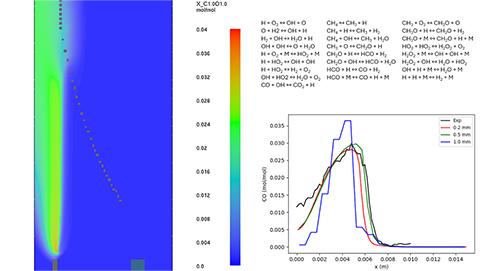
Improving and extending the capabilities and validation basis of the Fire Dynamics Simulator.
Thermal Decomposition of Materials
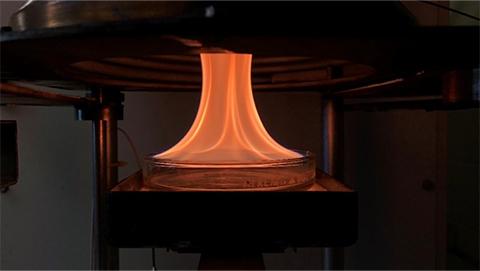
Examining how synthetic home furnishings and building materials become involved in combustion at the molecular level.
Wildland-Urban Interface Fire Modeling
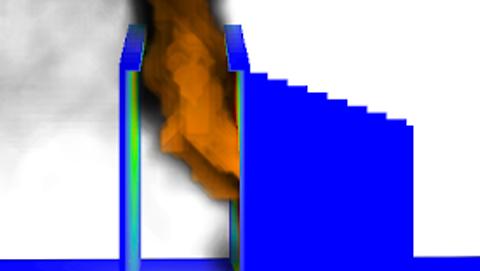
Validating existing and newly developed fire models against full-scale experimental data to produce simplified fire spread models.
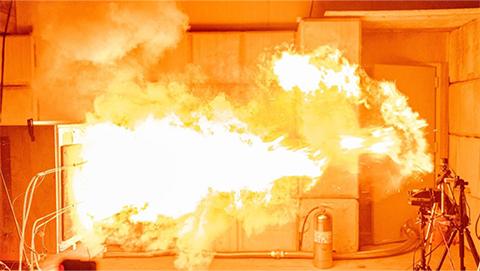
Backdraft and Smoke Explosions
Improving the understanding of fire-driven overpressure events to enable examination of mitigation tactics.
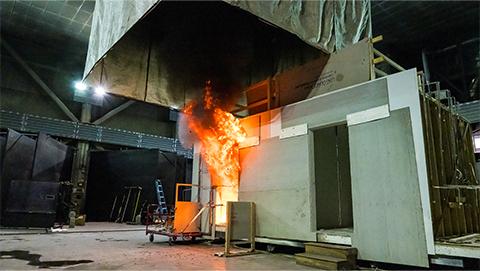
Fire Patterns Based on Oxygen Availability
Characterizing the relationship between oxygen availability and ventilation-generated fire patterns during post-flashover fires.
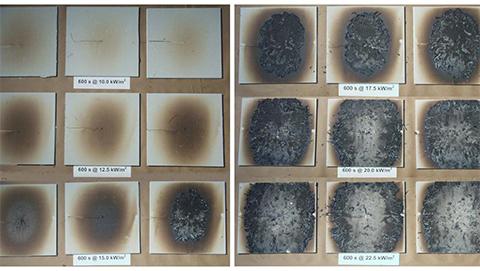
Impact of Moisture on Calcination
Understanding the impact of moisture on fire damage patterns derived from calcination depth surveys.
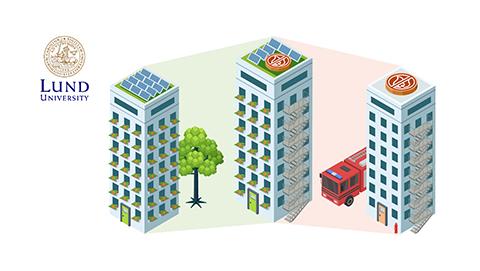
Decision Support Frameworks for a Sustainable and Fire Resilient Built Environment
Facilitating better decision-making in the design process to deliver more holistic sustainable and fire resilient buildings.
Access Free Resources
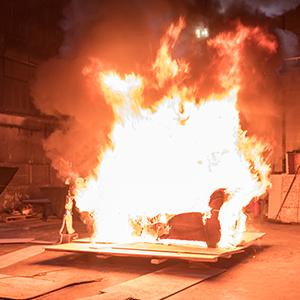
Materials and Products Database (MaP)
Find material data for your fire model. The MaP is a free, web-based repository of property data and fire test results for common contemporary materials and products, including upholstered furniture, mattresses, roofing, siding, insulation, and interior finishes. Use it to build model inputs, test fire scenario hypotheses, and support investigations.

Fire Dynamics Simulator (FDS)
Work with the latest release of fire models used worldwide. FDS 6.11, released in May 2026, includes updates to the flux limiter, mesh refinement, and the mixing and chemistry formulation. Verification and validation scripts now run in Python. The Fire Safety Research Institute and National Institute of Standards and Technology (NIST) lead FDS development through software work and experiments.
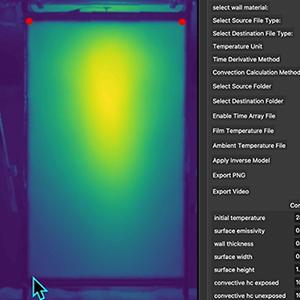
Heat Flux using Infrared Thermography over Surfaces (HFITS)
Measure heat flux across an entire surface, not just at a single point. HFITS is a free, open-source software that turns infrared camera data into high-resolution, two-dimensional heat flux measurements, giving researchers and engineers a more accessible way to run advanced thermal analysis and validate fire models.
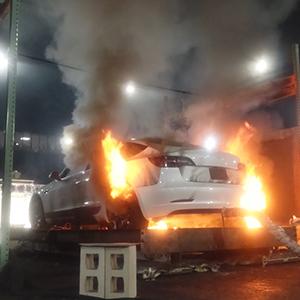
Modeling Heat Exposure from Full-Scale Vehicle Fires
Estimate how much radiant heat a burning vehicle delivers to its neighbors. This peer-reviewed study uses full-scale experiments on electric and gas-powered vehicles to develop and validate a compact, physics-informed model of heat exposure at distances like adjacent parking spaces. It gives fire protection engineers a practical tool for performance-based design, and a benchmark for more advanced simulations.
Learn More
Fire dynamics is the study of how fires start, grow, spread, and decay, including how heat, smoke, and gases move through a space. Understanding it lets engineers and investigators predict fire behavior and interpret what happened after a fire.
Better understanding of fire dynamics and better models improve our work on wildfires, lithium-ion battery hazards, and firefighter safety, because each of those depends on accurately representing the physics of fire.
FDS is a computational fluid dynamics model, developed by a team lead by NIST, that predicts smoke and heat transport from fires in the built environment. The Fire Safety Research Institute and NIST lead its development through software work, experiments, and validation.
The Materials and Properties Database offers property and fire test data for common contemporary materials and products, along with a technical reference guide explaining the measurement methods and uncertainties.
Work on fire patterns, calcination, and ventilation effects helps investigators interpret damage evidence. Models and material data let them test hypotheses about how a fire developed.
Newsletter Sign-Up