Hello

Wildland-Urban Interface Research
Advancing knowledge of fire spread to shape a more resilient built environment.
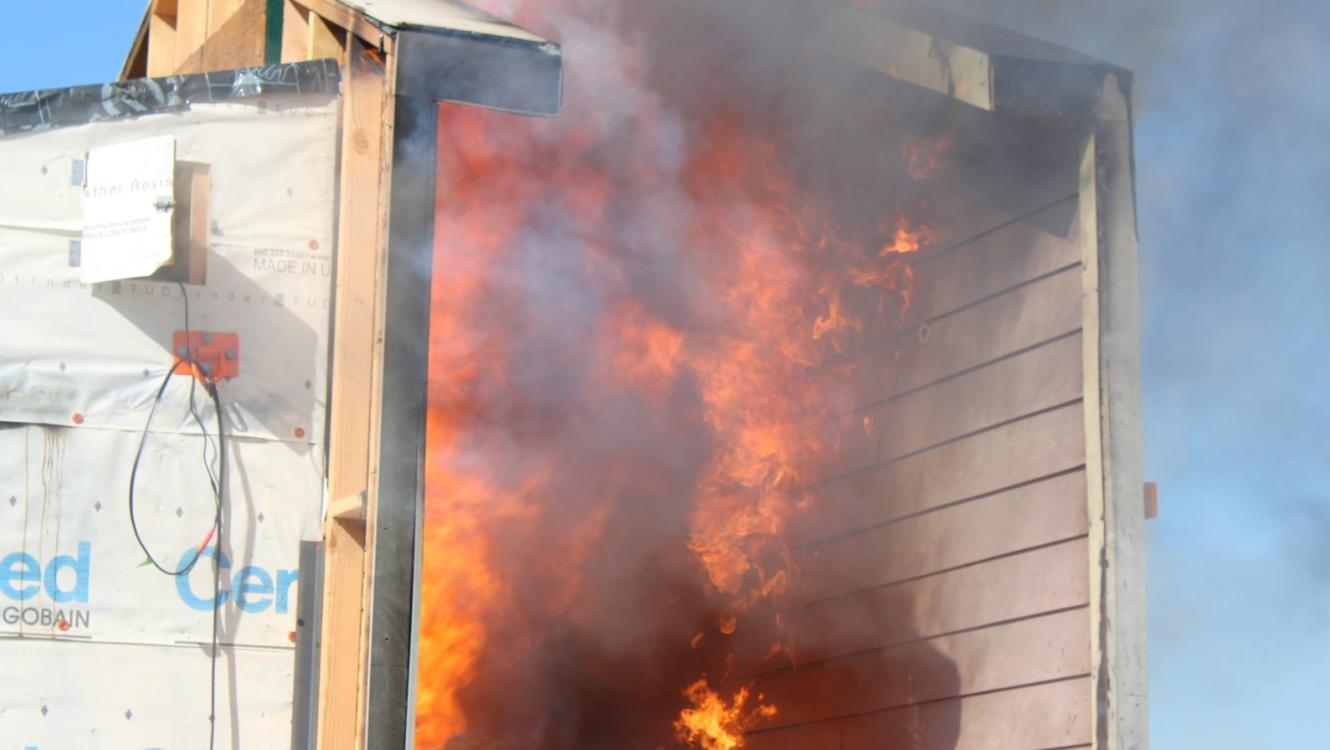
Destructive fires in and adjacent to the wildland-urban interface are on the rise, and the communities living in these areas are facing a threat that traditional fire prevention does not fully address. As homes are built closer together and close to wildland fuels, a single ignition can move quickly from vegetation to and through the built environment.
Every community’s risk looks different and is shaped by terrain, building materials, density, and local weather patterns. Addressing the risk requires a scientific understanding of how fire moves through the built environment so that codes, standards, and community planning can be grounded in evidence. UL Research Institutes’ Fire Safety Research Institute is driving to understand the mechanisms that impact fire spread within communities in and near the WUI.

"Through full-scale experiments and independent analyses of WUI fire and community conflagration incidents, we’re uncovering the mechanisms behind how fire spreads between structures in the built environment. That understanding will help communities to prepare and build resilience against wildfires in the future."
—Gavin Horn
Senior Director of Research
UL Research Institutes | Fire Safety Research Institute
Explore the Current Research
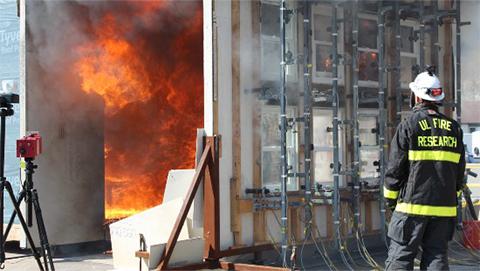
Structure-to-Structure Fire Spread
Evaluating the process through which heat transfer from structure fires can ignite adjacent structures.
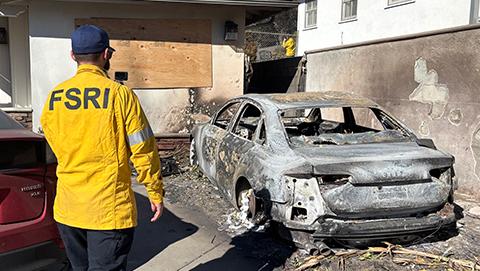
California Fires Independent Analysis
Investigating the timeline, response efforts, and lessons learned from the January 2025 Southern California fires through an independent analysis.
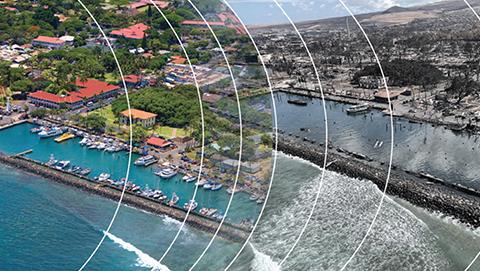
Maui Wildfires Analysis
Documenting the independent analysis, timeline, and findings now guiding Hawaii’s wildfire prevention initiatives.
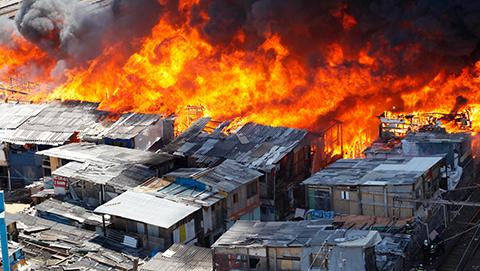
Kindling: Fire Safety in Informal and Humanitarian Settlements
Supporting Kindling’s research to analyze fire hazards across diverse humanitarian settlements to close a major gap in community fire safety.
Access Free Resources
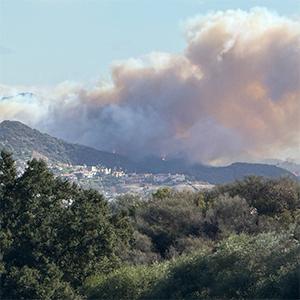
Southern California Fires Timeline Report
Commissioned by the Office of the Governor of California, the first report of this independent analysis reconstructs the January 2025 fires, tracing prevention, preparedness, and response systems alongside a detailed, evidence-based timeline of how the fires spread.
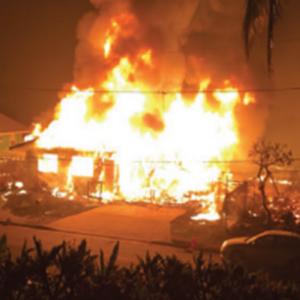
Lahaina Fire Incident Analysis Report
Commissioned by the Hawaiߵi Attorney General, this report uses a systems analysis to evaluate how environmental conditions, human activity, and policy gaps intersected during the Lahaina fire, yielding 84 findings and 140 actionable recommendations.
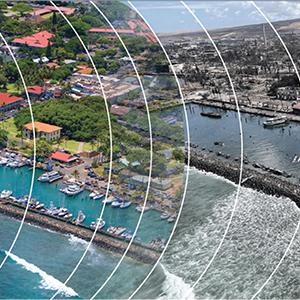
Lahaina Fire Comprehensive Timeline Report
Commissioned by the Hawaiߵi Attorney General, this report reconstructs the Lahaina fire spread using a comprehensive body of evidence related to preparedness efforts, fire progression, evacuation activity, emergency response, and suppression.
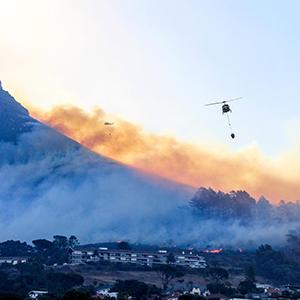
Structure Triage Considerations for Wildland Urban Interface Firefighting
The Fire Safety Academy is a free, online training platform translating current fire science into real-world training. This course explores ignition pathways and flame spread mechanisms in the built environment, examining structure and community-level vulnerabilities to guide structure triage during WUI fire incidents.
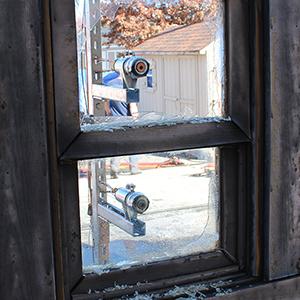
Window Pane Failure During Exterior Fire Exposure
Published in Fire Technology, this peer-reviewed study investigates how different window panes fail under fire exposure, which offers critical evidence for reducing the risk of fire spreading from structure-to-structure.
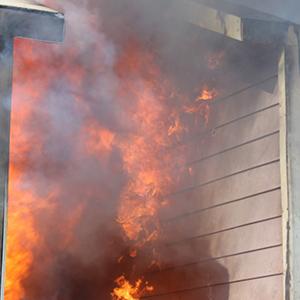
Residential Exterior Wall Reaction to Post-Flashover Compartment Fires
Published in Fire and Materials, this peer-reviewed study investigates how exterior wall materials influence structure-to-structure fire spread.
Frequently Asked Questions
Structures and communities in and near the WUI may be at high risk for impact from exterior fires, particularly if located in regions where hot and dry conditions can be exacerbated by high wind events. Thus, fires in the WUI, which often involve vegetation, structures, and room-and-contents materials, can rapidly grow to involve many structures and reach nearby communities in a short period of time. As such, fire departments and communities need to prepare differently than for fires limited to the inside of a structure, and may need to incorporate different tactics and techniques to respond to WUI fires.
Our research helps to understand how building components resist ignition and how fire spreads between structures. This research has been published in academic, peer-reviewed journals and introduced to technical committee members for potential adoption within documents such as the California Wildland-Urban Interface Code (formerly Chapter 7A) and NFPA 1140 Standard for Wildland Fire Protection.
The Structure Triage Considerations for Wildland Urban Interface Firefighting training course on the Fire Safety Academy provides both structural and wildland firefighters with the opportunity to explore the ignition pathways and fire spread mechanisms in the built environment. This course helps firefighters examine vulnerabilities at both the individual structure and community levels to guide decisions for structure triage during WUI fire incidents.
These analyses illustrate how important it is to consider communities’ resilience to a wildfire when it encroaches upon the built environment as a system — including the many components associated with prevention, preparedness, and response — to identify areas of strength and determine where improvements may be needed. They are an opportunity to examine weather, fuel, fire behavior, and their impact on the built environment, as well as to assess landscape, structure, and infrastructure resilience, the impact of codes and standards, fire suppression tactical effectiveness, notification and evacuation, and fire-adapted communities. Consideration of these factors allows for the development of impactful recommendations for the affected communities.
Newsletter Sign-Up
Get the latest wildland-urban interface research from ULRI’s Fire Safety Research Institute. Subscribe to our monthly newsletter.