

Fire Patterns Based on Oxygen Availability
- Overview
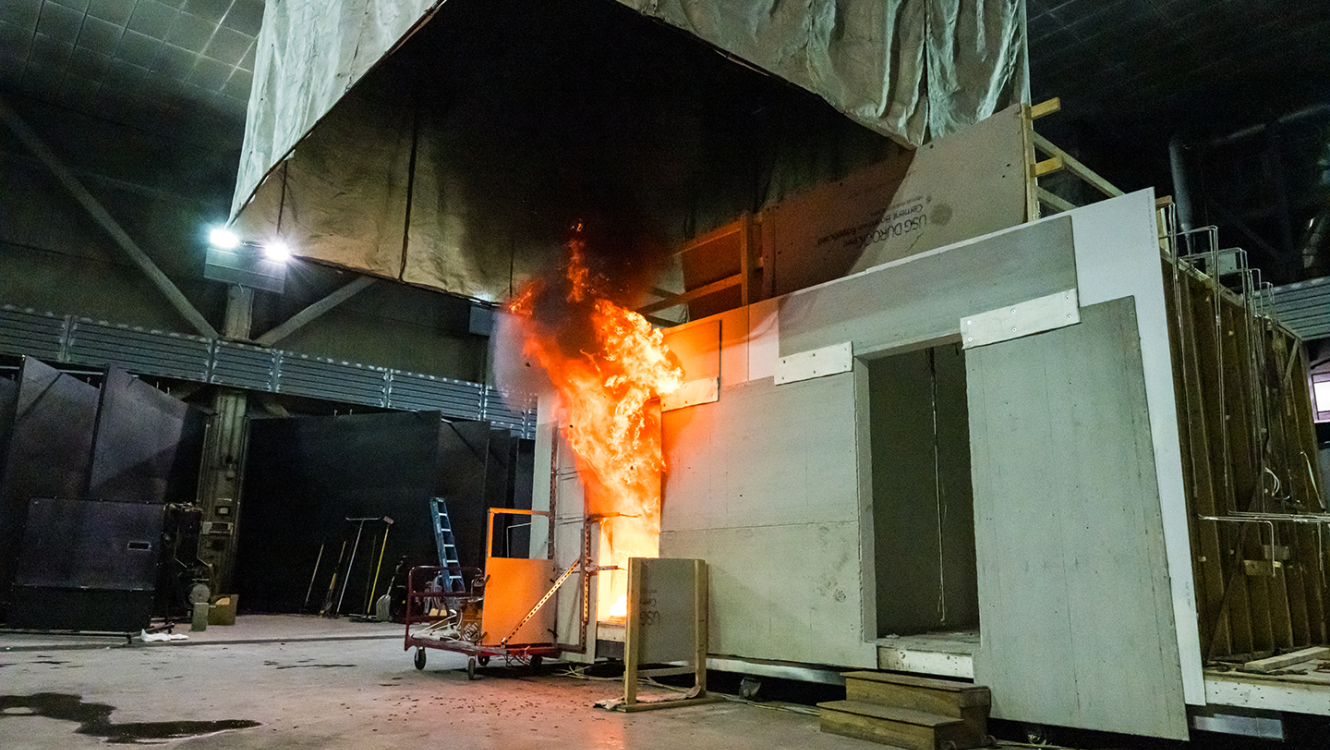
Accurate identification and interpretation of ventilation-generated fire patterns are essential tasks for fire investigators. Ventilation-generated fire patterns occur in post-flashover fire conditions, where intense burning exists near open ventilation that supplies fresh air. The critical feature of these patterns is that they may not indicate the area of origin and thus may mislead a fire investigator.
Guidance to fire investigators is often vague– relying on terms such as “proximate” or “remote” from ventilation to describe expected fire damage. The underlying problem is a lack of information about the relationship between variables in the fire environment and the resulting distribution of oxygen. Oxygen availability limits the conditions under which flaming combustion can occur, which in turn determines where fire damage is most likely to occur.
Objectives
The primary objective of the proposed research is to enhance the current understanding of ventilation-generated fire patterns. The scope is limited to characterizing ventilation-generated fire patterns in terms of the spatial distributions of oxygen, temperature, and fuel mass loss for a controlled post-flashover fire scenario (single compartment, symmetric layout, and fixed ventilation). The instrumentation plan is unique among fire science experiments due to its high density of measurements, enabling new insights into post-flashover fire behavior. The fuel load and ventilation size are varied to produce different degrees of ventilation-limited conditions, allowing comparisons between the resulting fire patterns, which can be related to the responsible fire behavior. Specific research questions include:
- Where do regions of fresh air and of flaming combustion exist in a post-flashover environment?
- How do measurements of oxygen availability during the fire relate to the resulting fire patterns?
- How do post-flashover conditions in fires fueled by a single fuel item compare to fires fueled by distributed fuel sources that ignite during flashover (e.g., combustible floor)?
- How do changes in ventilation (varying door width) affect post-flashover fire behavior and the resulting fire patterns?
- How accurate are fire models in predicting post-flashover fire behavior, particularly in terms of oxygen availability?
Experimental Methods
This research framework is informed by full-scale experiments conducted in partnership with the Bureau of Alcohol, Tobacco, Firearms and Explosives - Fire Research Laboratory (ATF-FRL). Building on ten unique experimental configurations, this foundational experiment series provides ULRI’s fire safety experts with valuable insights into key aspects of fire behavior and patterns. Variables included fuel load, ventilation size, and compartment boundary conditions, which were determined beforehand based on fire modeling from the Fire Dynamics Simulator, due to the expectation that these variables would generate strong post-flashover fire conditions while maintaining contrasting fire behavior and fire patterns.
To prepare for these tests, researchers built three compartments: two single-room compartments and one double-room compartment. The single-room compartments measure 10 x 10 x 8 ft, with a fixed door opening of 3 x 7 ft, centered on the front wall. The double room compartment consisted of two 10 x 10 ft rooms, with an interior door centered on the adjoining wall. The front room had a fixed, exterior door opening centered on the wall 90 degrees from the adjoining wall.
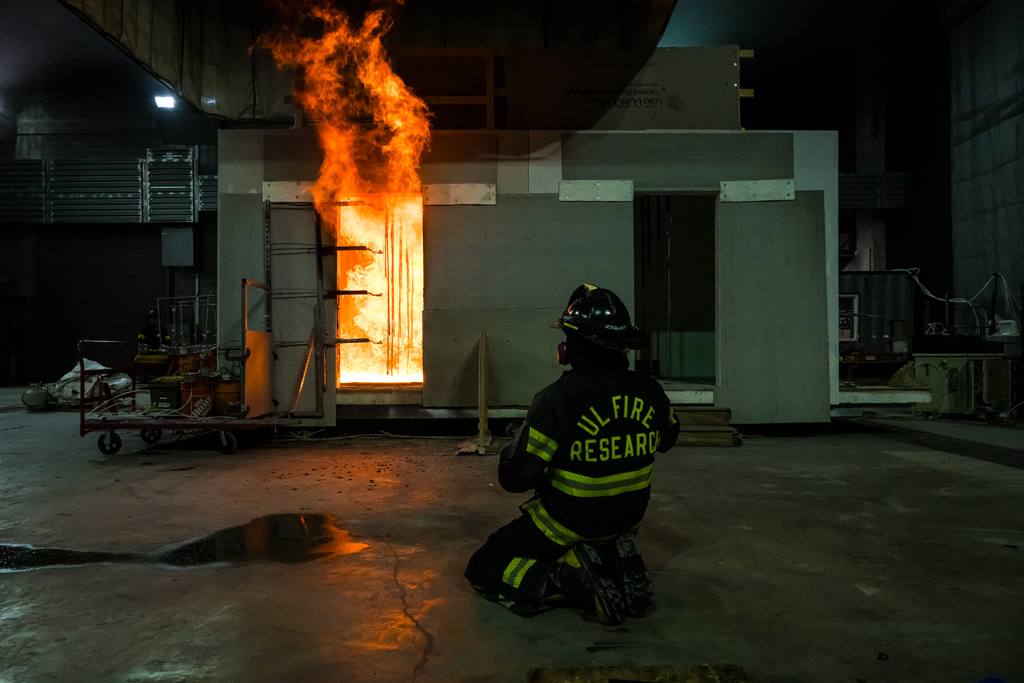
Additionally, the compartment boundaries consisted of either insulated or painted drywall. To preserve these compartments through multiple rounds of experiments and to survive post-flashover conditions, the walls and ceilings were lined with two layers of ½-inch-thick ceramic fiber insulation blankets over drywall and plywood. To gain a more realistic understanding, the insulation was then removed for the final experiment in each compartment, leaving the painted drywall exposed.
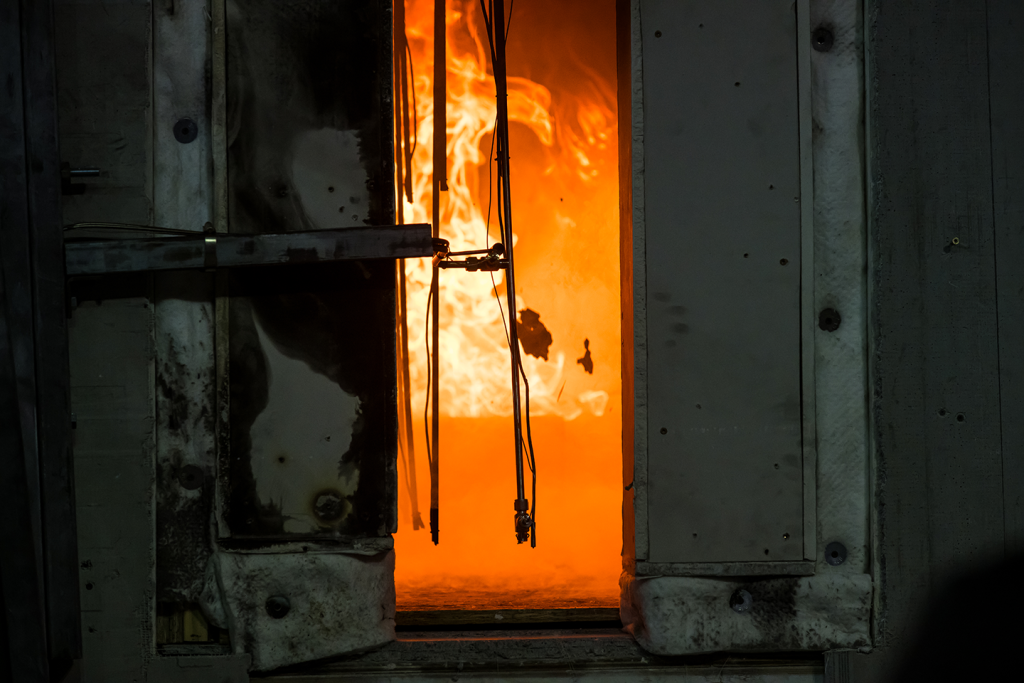
The fire compartments were instrumented to measure oxygen concentration at 28 sampling locations. Each location was paired with a thermocouple to measure gas temperature. Additional measurements included total heat release rate, gas velocity through the door opening, and heat flux to the floor and walls. These measurements enable detailed insights into the fire dynamics in each experiment.
Following each experiment with distributed fuel loads, suppression was activated two minutes after flashover. The two-room experiments were instead allowed to continue until the fuel was mostly consumed.
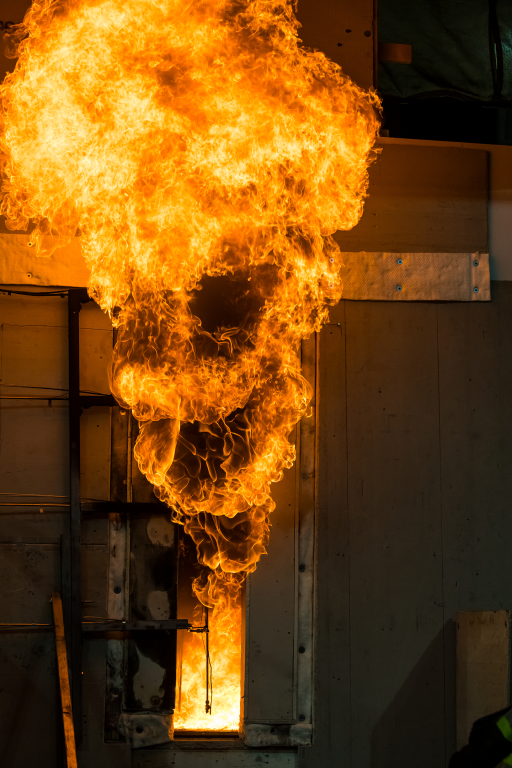
Several experiments included a wood floor that acted as a target fuel to ignite as part of flashover. In these experiments, the fire was suppressed two minutes after flashover, and a section of the wood floor was collected. The floor sample was then cut into smaller pieces, dried, and then weighed to provide a measure of the spatial variability in fuel mass loss. The resulting data provides a quantifiable measure of fire damage that can be compared with measurements collected during the fires.
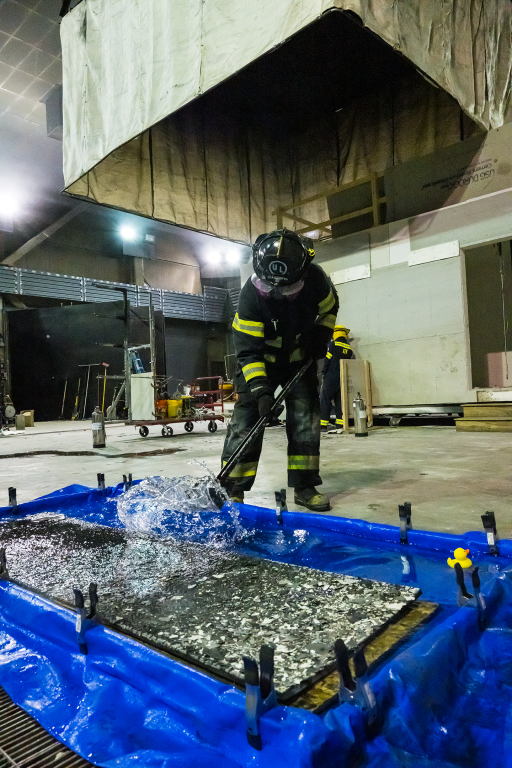
Following data analysis, findings from these experiments will be published in peer-reviewed journal articles to support applications in fire investigation and fire modeling.

Published: December 19, 2025
Stay Informed
Get instant updates about this project as they become available.
