

UL Research Institutes’ Fire Safety Research Institute Wildland Urban Interface Advisory Committee held its annual spring meeting in Bend, Oregon. The two-day meeting brought together committee members, invited guests, and ULRI researchers to collaborate, share project updates, and engage in field-based learning to advance WUI fire safety.
Committee Updates and Guidance
During the meeting, ULRI researchers shared progress on several ongoing and emerging research efforts to improve WUI fire prevention, preparedness, response, and recovery. Updates included the status of work on the Southern California Fires Analysis, structure‑to‑structure fire spread, vehicle fires in the WUI, post‑fire water contamination in the WUI, and firebrand ignition of building materials. Researchers also discussed progress on the National Emergency Response Information System and its potential role in future WUI research. Lastly, they reviewed the recently released Fire Safety Academy course, Structure Triage Considerations for Wildland Urban Interface Firefighting, highlighting how it translates research findings into actionable knowledge for the fire service and brings the FSA to wildland firefighters for the first time.
WAC members and guests representing fire service organizations, government agencies, academia, and the private sector provided updates on their own organizations’ initiatives and discussed how their work relates to ULRI’s research. These discussions fostered meaningful dialogue about opportunities for collaboration and ways ULRI could expand or refine its WUI fire safety work. Conversations throughout the meeting centered on six themes: home hardening guidance, training for WUI firefighting tactics, integrated public education, wildland firefighter health and safety — including respiratory protection, fire modeling, and use of technology to improve intelligence gathering. Together, these themes reflect shared priorities for improving fire resilience across the WUI through research-based solutions.
Flat Fire Staff Ride
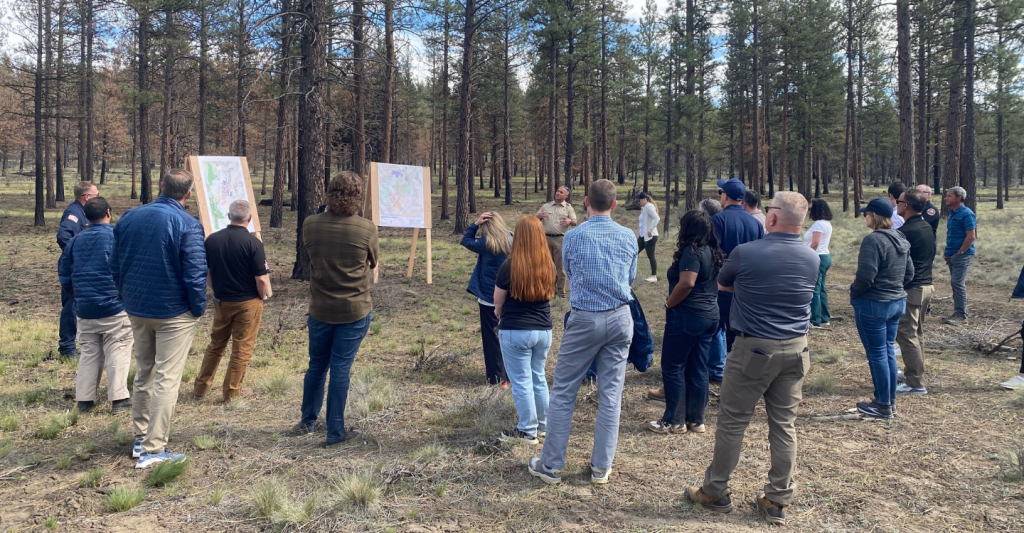
On the afternoon of the second day, participants took part in a staff ride of the Flat Fire led by the Sisters-Camp Sherman Fire District and state and federal fire officials. During the tour, committee members learned firsthand how Oregon has applied the National Cohesive Wildland Fire Management Strategy, and how the coordinated community risk reduction efforts, targeted training, and effective response strategies contributed to the successful containment of the fire with minimal damage to the built environment. The staff ride provided valuable real‑world context for the meeting discussions and reinforced the importance of integrating research, training, and operational practice to reduce WUI fire impacts.
ULRI extends its appreciation to the WAC members, guest participants, and the Oregon fire officials for their engagement and insights. The 2026 annual meeting highlighted the value of the advisory committee in guiding ULRI’s WUI research program and ensuring its work continues to support the needs of the fire service and WUI communities.
The WAC will next meet virtually in the fall.

