
Report Examines Fire Safety Hazards of E-mobility Devices on Passenger Railcars
The e-mobility landscape has expanded significantly in recent years. Devices such as e-scooters, e-bicycles, and seated e-scooters are common for urban commuters needing first-and last-mile transportation solutions. However, high-profile fire incidents involving these devices in both residential and commercial buildings have raised public safety concerns. As more riders bring these devices aboard passenger railcars, questions have emerged about what those risks look like in the rail transit environment.
UL Research Institutes’ Fire Safety Research Institute, with the support of the Fire Department of the City of New York and Christiana Fire Company, conducted experiments aboard a passenger railcar to examine how thermal runaway-initiated e-mobility fires may impact passenger safety and evacuation conditions. The findings are detailed in the Recommendations to Improve Passenger Railcar Safety During Electric Micromobility Device Fires report.
Examining the Impact of Thermal Runaway-Initiated Fires on Passenger Railcars
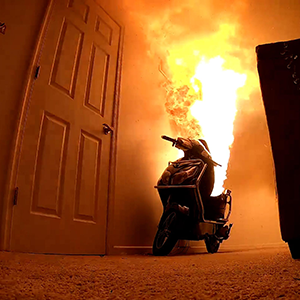
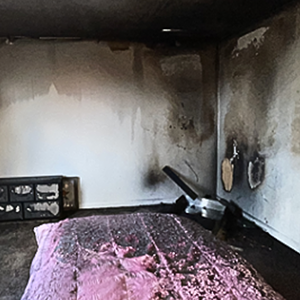
When an e-mobility device battery fails, it can undergo thermal runaway, in which the lithium-ion cells enter an uncontrollable, self-heating state. Previous research led by our fire safety experts examined hazards posed by thermal runaway of e-mobility devices in residential settings. This study examines what happens if this occurs on a passenger railcar. Experiments were conducted to understand how quickly toxic combustion byproducts and heat exposure could incapacitate passengers and how much time occupants would have to escape
Researchers used a single-level intercity commuter railcar to run four experiments with three devices: a standing e-scooter, an e-bicycle, and two seated e-scooters. Devices were placed in locations most likely to be used by real passengers based on size and proximity to their seat. The railcar was equipped to measure gas temperatures, radiant heat exposure, and toxic gas concentrations. Cameras positioned throughout the car captured how quickly smoke and fire conditions developed.
What the Experiment Findings Reveal About Passenger Railcar Safety
Passengers within 10 feet of a burning e-mobility device could be quickly incapacitated by thermal exposure from the severe fire these devices can produce. Most people would likely not recognize the imminent danger of a failing battery until smoke suddenly starts to vent from the device. Once flaming began, smoke reached the opposite end of the railcar within 30 seconds. Full visibility was lost in under four minutes. Typically, devices only smoked for seconds before igniting. Based on toxic gas measurements, conditions that significantly impact escape developed between 3 minutes 37 seconds and 7 minutes 8 seconds after ignition.
This study did not measure the required safe egress time for railcars (i.e., the amount of time it would take to evacuate everyone from the railcar), but previously published evacuation research suggests the available time for safe egress is less than what is required for safe egress.
Considerations for Improved Passenger Safety
In addition to the full dataset, the report outlines considerations that could meaningfully improve passenger safety.
- Railcar design: Physical modifications could create separation between device storage and passenger seating.
- Device policies: Require safety certified devices, consider restrictions on the size of e-mobility devices allowed on board, and specify designated storage areas.
- Transit staff training: Provide lithium-ion battery-specific training to passenger railroad staff.
- Public education: Help riders understand and reduce the risks before they board.